Quantum Computer Pricing: What Does It Really Cost?

Source:https://postquantum.com

The topic of quantum computer pricing often generates confusion, speculation, and unrealistic expectations, largely because quantum computing does not follow the traditional cost models of classical computers. Unlike consumer laptops or enterprise servers, quantum machines are complex scientific systems that combine advanced physics, specialized materials, and highly controlled environments. This article explores what actually determines the cost of quantum computers, why pricing is not straightforward, and how organizations should think about value rather than sticker price when evaluating quantum technology.

1. Why Quantum Computers Are Not Priced Like Traditional Systems

Quantum computers differ fundamentally from classical machines in both architecture and purpose. While a classical computer is built from standardized components such as processors, memory chips, and storage devices, a quantum computer is a highly specialized system designed to maintain fragile quantum states. This distinction has a profound impact on cost.

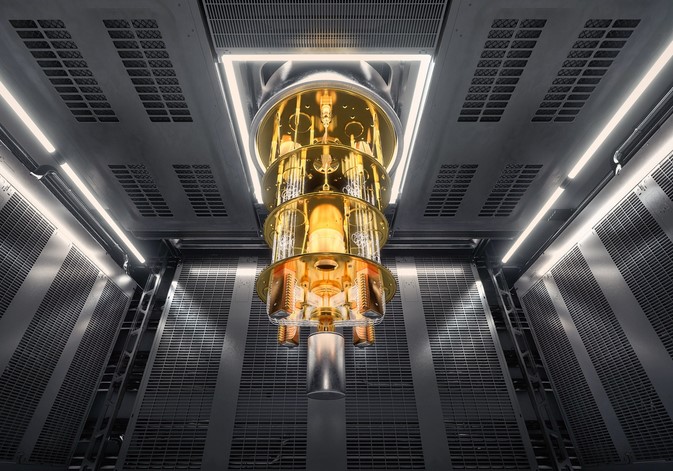
At the core of a quantum computer are qubits, which can be implemented using various physical methods such as superconducting circuits, trapped ions, or photons. Each approach requires unique manufacturing processes, materials, and operating conditions. For example, many systems must operate at temperatures near absolute zero, necessitating advanced cryogenic equipment that alone can cost millions of dollars.

Additionally, quantum computers are not mass-produced products. Most existing machines are custom-built for research institutions, government laboratories, or large technology companies. The absence of economies of scale significantly increases unit cost. Each system is often tailored to specific experimental or computational goals, further driving up development and integration expenses.

Another key factor is research and development investment. A significant portion of the cost associated with quantum machines reflects years of theoretical research, experimental testing, and engineering refinement. Organizations developing quantum systems must recover these investments, which influences how access and usage are priced.

2. Components That Drive the True Cost

Understanding what contributes to the overall expense of a quantum computer requires looking beyond the qubits themselves. The total cost is the sum of multiple interdependent systems working together in a highly controlled environment.

Hardware and Infrastructure

Quantum hardware includes far more than the quantum processor. Control electronics, signal generators, amplifiers, and shielding systems are essential for operating and stabilizing qubits. These components must meet extremely high precision standards, often exceeding those used in conventional electronics.

Infrastructure costs are equally significant. Many quantum systems require vibration-free environments, electromagnetic shielding, and specialized laboratory facilities. Power consumption, cooling systems, and ongoing maintenance add to long-term operational expenses. These requirements make it impractical for most organizations to host quantum machines on-site.

One Subheading: Software, Talent, and Operational Overhead

Beyond physical hardware, software development and human expertise represent a substantial portion of overall cost. Quantum software stacks include programming frameworks, compilers, error mitigation tools, and simulation environments. Developing and maintaining this software requires highly specialized teams with expertise in physics, mathematics, and computer science.

Talent acquisition is another major expense. Quantum engineers, researchers, and system operators are in short supply globally, commanding high salaries. Continuous training is also necessary, as the field evolves rapidly and best practices change frequently.

Operational overhead further increases cost. Quantum systems require constant calibration, monitoring, and experimentation to maintain performance. Downtime can be expensive, and achieving reliable results often involves repeated runs and extensive data analysis. These factors mean that ownership costs extend far beyond initial system construction.

3. Access Models and How Organizations Pay

Because of the immense cost and complexity of owning quantum hardware, most organizations do not purchase quantum computers outright. Instead, access-based models have become the dominant approach.

Cloud-based access allows users to run quantum workloads remotely through shared platforms. In this model, costs are typically based on usage metrics such as execution time, number of runs, or priority access levels. This approach dramatically lowers the barrier to entry and enables businesses, universities, and startups to experiment with quantum computing without massive capital investment.

Another emerging model is strategic partnership. Large enterprises may collaborate directly with quantum technology providers to gain dedicated access to systems tailored to specific research or industrial goals. While more expensive than general cloud access, this approach offers greater control and customization.

From a value perspective, organizations must evaluate cost in relation to potential impact. Quantum computing is not intended to replace classical systems but to solve specific problems that are otherwise infeasible. Pricing should therefore be assessed based on the potential to accelerate research, optimize complex processes, or unlock new capabilities rather than on direct cost comparison with classical hardware.

As the technology matures, costs are expected to evolve. Advances in manufacturing, standardization, and error reduction may reduce operational expenses over time. However, quantum computing is likely to remain a premium capability for the foreseeable future, reserved for high-value applications.

Understanding quantum computer pricing requires shifting perspective from traditional hardware costs to a broader view that includes infrastructure, expertise, and access models. Quantum computers are not consumer products; they are advanced scientific systems whose value lies in their ability to address problems beyond the reach of classical machines. As access becomes more widespread through cloud platforms and partnerships, organizations can engage with quantum technology in cost-effective ways while preparing for a future where quantum computing plays a strategic role in innovation and discovery.

Future of Quantum Hardware: Next-Gen Machines Explained

Source:https://www.thedigitalspeaker.com

The future of quantum hardware represents one of the most transformative frontiers in modern technology, promising computational capabilities far beyond what classical systems can achieve. As industries face increasingly complex problems in cryptography, materials science, climate modeling, and artificial intelligence, quantum machines are emerging as a foundational technology for the next era of computing. This article provides a clear, professional, and forward-looking explanation of how next-generation quantum hardware is evolving, what makes it fundamentally different, and why it matters for the global technology ecosystem.

1. Foundations of Quantum Hardware Evolution

Quantum hardware is built on principles of quantum mechanics, most notably superposition, entanglement, and quantum interference. Unlike classical bits, which exist strictly as 0 or 1, quantum bits—or qubits—can exist in multiple states simultaneously. This property enables quantum computers to process massive numbers of possibilities in parallel.

Early quantum systems were primarily experimental, limited by instability and high error rates. These early machines required extreme environmental conditions, such as temperatures near absolute zero, to maintain qubit coherence. While groundbreaking, they were not suitable for large-scale or commercial use. Over time, however, hardware designs have matured, moving from laboratory prototypes toward more reliable and scalable architectures.

One of the most important shifts in quantum hardware development has been the focus on engineering discipline. Researchers now treat quantum systems not only as scientific instruments but as complex machines that must meet standards of reliability, repeatability, and manufacturability. This transition marks a critical step toward practical deployment.

The evolution of quantum hardware is also being driven by interdisciplinary collaboration. Physicists, electrical engineers, materials scientists, and computer scientists are working together to solve challenges related to qubit stability, signal control, and system integration. This convergence of expertise is accelerating innovation and shortening development cycles.

2. Next-Generation Quantum Machine Architectures

Next-generation quantum machines are defined by improvements in qubit quality, system scalability, and operational efficiency. Several competing hardware approaches are shaping the landscape, each with distinct advantages and technical trade-offs.

Leading Qubit Technologies

Superconducting qubits remain one of the most widely used approaches due to their compatibility with existing semiconductor fabrication techniques. These qubits leverage superconducting circuits to create controllable quantum states and are favored for their fast operation speeds and strong industry support.

Trapped-ion systems, by contrast, use individual ions suspended in electromagnetic fields. These machines are known for exceptionally high qubit fidelity and long coherence times, making them ideal for precision-focused applications. However, scaling trapped-ion systems presents unique engineering challenges related to physical spacing and control complexity.

Photonic quantum systems represent another promising direction. By encoding quantum information in particles of light, these machines can potentially operate at room temperature and integrate more easily with existing communication networks. While photonic systems face hurdles in logic gate implementation, ongoing advances in optical components are steadily improving their viability.

One Subheading: Hardware Scalability and Error Mitigation

Scalability is the defining challenge of next-generation quantum machines. Adding more qubits alone is not sufficient; the system must also manage increasing noise, signal interference, and error accumulation. As machines grow larger, even minor imperfections can degrade performance.

To address this, hardware designers are incorporating advanced error mitigation techniques directly into machine architecture. These include improved qubit layouts, optimized control electronics, and hybrid systems that distribute workloads across modular quantum units. Rather than relying solely on software-based error correction, next-generation machines are being designed with error resilience as a core hardware feature.

Another major focus is integration. Modern quantum hardware increasingly combines quantum processors with classical control systems in tightly coupled environments. This hybrid approach allows classical processors to manage calibration, error tracking, and optimization in real time, significantly improving overall system stability.

3. Industrial Impact and Long-Term Outlook

As quantum hardware matures, its influence on industry and society will expand dramatically. In the near term, quantum machines are expected to complement classical systems rather than replace them. Hybrid computing models will allow organizations to offload specific, high-complexity tasks to quantum processors while maintaining classical infrastructure for everyday operations.

Industries such as pharmaceuticals and materials science are already exploring how quantum hardware can accelerate molecular simulations and material discovery. Financial institutions are investigating optimization and risk analysis models that exceed the capabilities of traditional systems. Governments and research organizations are investing heavily in quantum infrastructure to ensure technological leadership and national security.

Long-term, quantum hardware development is likely to follow a trajectory similar to early classical computing. Initial machines will be expensive and specialized, accessible primarily to research institutions and large enterprises. Over time, advances in manufacturing, standardization, and system design will reduce costs and expand accessibility.

Equally important is the development of a skilled workforce. As quantum hardware becomes more prevalent, demand will grow for engineers and technicians who understand both quantum theory and practical system engineering. Educational institutions and training programs are beginning to adapt curricula to meet this emerging need.

The future of quantum hardware is defined by a transition from experimental devices to engineered, scalable machines capable of addressing real-world challenges. Through advances in qubit technology, system architecture, and hardware-level error mitigation, next-generation quantum machines are steadily moving closer to practical adoption. While significant challenges remain, the pace of innovation suggests that quantum hardware will play a central role in shaping the next chapter of computing, unlocking possibilities that were once considered purely theoretical.

The Future of Quantum AI: Unlocking the Next Wave of Intelligence

Source:https://specials-images.forbesimg.com

The convergence of quantum computing and artificial intelligence (AI) has sparked excitement across various industries, creating the potential for revolutionary advancements. The future of quantum AI promises to unlock new levels of intelligence, problem-solving capabilities, and computational efficiency. Quantum AI combines the strengths of quantum mechanics and machine learning to push the boundaries of what is possible with classical computing. As quantum hardware improves and AI algorithms evolve, we are entering an era where these two powerful technologies can fundamentally transform industries ranging from healthcare and finance to logistics and cybersecurity. In this article, we explore the promising future of quantum AI, its potential applications, and the challenges that lie ahead.

What is Quantum AI?

Quantum AI is the fusion of quantum computing and artificial intelligence. Quantum computing leverages the principles of quantum mechanics, such as superposition and entanglement, to perform calculations at speeds unimaginable with classical computers. AI, on the other hand, uses algorithms and data-driven models to enable machines to learn, reason, and make decisions without human intervention.

By combining quantum computing with AI, we open the door to solving problems that were previously intractable. Quantum computers can process vast amounts of data simultaneously, vastly improving the speed and efficiency of AI algorithms. This could lead to breakthroughs in machine learning, optimization, and even the development of new types of intelligent systems that adapt to changing conditions in real time.

How Quantum AI Works

At the heart of quantum AI is the quantum computer, which operates using quantum bits or qubits. Unlike classical bits, which can only represent a 0 or 1, qubits can exist in multiple states simultaneously due to the principle of superposition. This allows quantum computers to handle complex problems by processing vast amounts of information at once.

In the context of AI, quantum computers can accelerate certain machine learning tasks. For instance, quantum algorithms can potentially improve the speed of training models, leading to faster decision-making in applications like natural language processing (NLP), image recognition, and predictive analytics. Quantum-enhanced machine learning could also be used to tackle optimization problems—such as finding the most efficient solution to logistical or financial problems—at a scale and speed that classical algorithms struggle to achieve.

Key Applications of Quantum AI

As we look to the future of quantum AI, several industries stand to benefit from the unique capabilities offered by quantum computing in combination with AI. Here are some of the most exciting areas where quantum AI is expected to make a significant impact:

1. Healthcare: Revolutionizing Drug Discovery and Personalized Medicine

One of the most promising applications of quantum AI lies in healthcare, specifically in drug discovery and personalized medicine. The process of designing new drugs is incredibly complex, as it requires simulating and testing a vast number of molecular interactions. Classical computers struggle to model these interactions accurately due to the sheer computational power required.

Quantum AI, however, could accelerate drug discovery by simulating molecular interactions at an atomic level. This would not only speed up the identification of new drugs but could also make the process more cost-effective. Additionally, quantum AI could be used to personalize treatment plans based on individual genetic profiles, optimizing healthcare outcomes for patients.

2. Finance: Enhancing Predictive Analytics and Risk Management

The financial industry could see a dramatic transformation from the future of quantum AI. Quantum computing’s ability to analyze vast amounts of data quickly could be used to enhance predictive analytics, enabling financial institutions to make more accurate market predictions and optimize investment strategies.

Moreover, quantum AI could significantly improve risk management by providing more accurate modeling of complex financial systems. With quantum-enhanced machine learning, financial institutions could better predict market shifts, identify potential risks, and even design more efficient algorithms for algorithmic trading. This could reduce uncertainty in the financial markets and improve the stability of the global economy.

3. Logistics and Supply Chain Optimization

Quantum AI also holds great potential in optimizing supply chains and logistics. The complexity of managing global supply chains, especially in industries like manufacturing, transportation, and retail, often involves handling massive amounts of data related to inventory management, demand forecasting, and route optimization. Quantum computing could significantly improve optimization algorithms, enabling companies to find the most efficient solutions to these problems in real time.

By leveraging quantum AI, businesses could optimize transportation routes, reduce operational costs, and minimize delays, leading to more efficient supply chains and better customer service. This would be particularly beneficial for industries like e-commerce, where fast delivery times are critical to customer satisfaction.

Challenges and Barriers to Overcome

Despite the exciting possibilities of quantum AI, there are several challenges that must be addressed before the technology can be widely implemented. These challenges include hardware limitations, algorithmic development, and the need for skilled professionals in the field.

1. Quantum Hardware Limitations

The development of quantum hardware is still in its early stages. Quantum computers are highly sensitive to their environment, and qubits are prone to errors due to factors like temperature fluctuations and electromagnetic interference. To harness the full potential of quantum AI, these hardware challenges must be overcome, and quantum computers need to be made more stable, scalable, and error-resistant.

Currently, only a handful of companies and research institutions have the resources and expertise to build and maintain quantum computers. As quantum hardware continues to improve, more access to quantum computing will become available, enabling broader adoption of quantum AI applications.

2. Developing Quantum Algorithms for AI

While quantum hardware is essential, quantum algorithms tailored to AI applications are just as important. The development of algorithms that can effectively leverage quantum computing’s power is a complex and ongoing challenge. Quantum machine learning algorithms must be designed to handle the probabilistic nature of quantum systems while ensuring that the benefits of quantum speedup are realized.

Researchers are still in the process of developing practical quantum algorithms that can be applied to real-world AI tasks. While progress is being made, there is still a long road ahead before quantum AI algorithms can be standardized and optimized for various industries.

3. Talent and Expertise Gap

The future of quantum AI depends not only on advances in hardware and algorithms but also on the availability of skilled professionals. Quantum computing and AI are highly specialized fields that require expertise in both quantum mechanics and machine learning. As the demand for quantum AI grows, there will be an increasing need for scientists, engineers, and developers with a deep understanding of both quantum physics and AI algorithms.

Bridging the talent gap will require investment in education and training, as well as collaboration between academia, industry, and government.

In conclusion, the future of quantum AI holds the promise of unlocking new frontiers in intelligence, problem-solving, and computational efficiency. By combining the power of quantum computing with the sophistication of AI, quantum AI is poised to transform industries such as healthcare, finance, and logistics, enabling breakthroughs that were once thought impossible. However, significant challenges remain in terms of hardware development, algorithm optimization, and talent acquisition. As these hurdles are overcome, we will see quantum AI play an increasingly important role in shaping the future of technology and the way we interact with the world around us. The potential for quantum AI is limitless, and we are just beginning to scratch the surface of what this powerful fusion of technologies can achieve.