
AI Generated Voices: The Future of Human-Like Audio

Source:https://cdn.allvoicelab.com

Imagine receiving a phone call from your grandmother. The cadence of her voice, that specific way she laughs, and even her subtle regional accent are all there. She tells you she’s lost her voice due to a recent illness, but thanks to a small device, she can still “speak” to you in her own tone just by typing. This isn’t a scene from a sci-fi movie; it’s a reality we are building today.

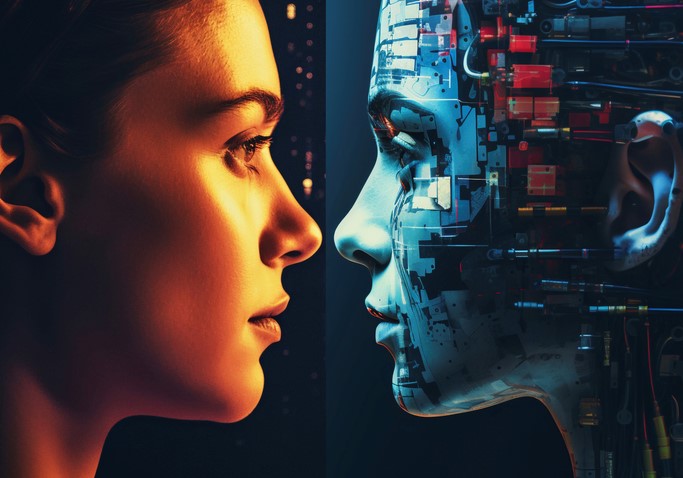
As someone who has spent over a decade navigating the corridors of HealthTech and software development, I’ve watched AI generated voices evolve from the “robotic stutter” of early GPS systems to something so eerily human that it can pass the “Turing Test” of the ear. We are no longer just making machines talk; we are giving them a soul—or at least, a very convincing digital mimicry of one.


From Robotics to Realism: How Does It Sound So Real?

In my early years as a tech writer, “Text-to-Speech” (TTS) was a frustrating experience. It was clunky and devoid of emotion because it used a method called “Concatenative Synthesis.” Think of it like a ransom note made of magazine clippings; the computer would stitch together tiny fragments of recorded human speech. It worked, but it sounded like a ghost trapped in a microwave.

Today, AI generated voices use Neural Networks and Deep Learning. To explain this simply, imagine a talented impressionist. An impressionist doesn’t just repeat words; they study the breath, the rhythm, and the pitch of a person.

Modern AI does exactly this through Neural TTS. It analyzes thousands of hours of human speech to understand the “prosody”—the patterns of stress and intonation in a language. It doesn’t “play back” recordings; it predicts what the next sound wave should look like based on the context of the sentence.


The Tech Stack: The Engine Behind the Voice

If you’re curious about the “how,” it boils down to two main components that I often encounter in the development of healthcare communication apps:

1. The Text Analysis Module

This is the “brain.” It looks at the text and decides if a word is a noun or a verb (think of the word “read”—is it past or present tense?). It identifies punctuation to know when to “take a breath.”

2. The Neural Vocoder

This is the “vocal cords.” This part of the AI generated voices architecture takes the abstract data from the analysis module and converts it into actual audio waves. Technologies like WaveNet or Tacotron have been the pioneers here, creating smooth, high-fidelity sound that lacks the metallic “buzz” of the past.


Revolutionizing Industries: It’s Not Just for Siri Anymore

While most people encounter AI voices through virtual assistants, my experience in the field has shown me much deeper applications that are transforming how we work and live.

Healthcare: Restoring the Gift of Speech

In the HealthTech niche, we use Voice Cloning for patients with ALS or those undergoing laryngectomies. By recording their voice before they lose it, we can create a permanent digital clone. This allows them to communicate with their loved ones using their own unique identity, preserving dignity in a way that “Stephen Hawking-style” voices never could.

Content Creation and Dubbing

The creative industry is undergoing a massive shift. I recently saw a demo where a video was translated from English to Spanish. Not only was the voice an AI generated voice that matched the original actor, but the AI also adjusted the “lip-sync” to match the new language. This is a game-changer for global education and entertainment.

Personalized Customer Experience

Imagine a bank where the AI voice on the phone recognizes your mood. If you sound frustrated, the AI lowers its pitch and adopts a “calming” tone. This Emotionally Intelligent AI is the new frontier of customer service.


Pro Tips: How to Spot (and Create) Quality AI Audio

Whether you are looking to use these tools for your brand or just trying to navigate a world full of deepfakes, here is some “Expert Advice” from the trenches:

Tips Pro: The “Breath” Test

When choosing an AI generated voices platform, listen for the “inhales.” High-quality AI now includes subtle, non-verbal sounds like tiny breaths or the click of a tongue. If the voice is a constant stream of sound without pauses for air, it will fatigue the listener’s ear within minutes.

Hidden Warning: The Ethics of Cloning

Never clone a voice without explicit, documented consent. In the tech industry, we are seeing a rise in “Voice Phishing” where AI mimics a CEO or family member to steal data. Always use platforms that have built-in watermarking and strict “Identity Verification” protocols.


Making It Scannable: Why Now?

Why is AI generated voices technology exploding right now? A few key factors:

  • Computational Power: We finally have the GPU strength to run these complex neural models in real-time.

  • Data Availability: The sheer volume of high-quality audio online has provided the perfect “training ground” for AI.

  • Accessibility: You no longer need a Ph.D. in Data Science. Tools like ElevenLabs, Play.ht, and Murf.ai allow anyone to generate professional audio in seconds.


The “Uncanny Valley” of Sound

We’ve talked about the “Uncanny Valley” in visuals, but it exists in audio too. This is the point where a voice sounds too human, yet something is slightly “off,” triggering a sense of unease.

I’ve found that the best AI voices actually embrace a bit of imperfection. We call this Stochasticity. By adding a tiny bit of random variation—the kind humans have naturally—the AI moves past the “creepy” phase and becomes genuinely pleasant to listen to for long periods, like in an audiobook.


Conclusion: A Symphony of Silicon and Soul

The era of the “Robot Voice” is officially dead. AI generated voices are paving the way for a more inclusive, efficient, and personalized world. From helping a patient find their voice again to allowing a small creator to produce a Hollywood-level documentary, the barriers are falling.

However, as we embrace this future, we must remain the “conductors” of this digital symphony. Technology provides the instrument, but human ethics and creativity must provide the melody.

What do you think? If you could “save” your voice in a digital vault for your grandchildren to hear 50 years from now, would you do it? Or does the idea of a digital voice living on feel a bit too strange?

Share your thoughts in the comments below—I’d love to hear your perspective on this vocal revolution!

VR Job Training: Hands-On Skills Without Risks

Source:https://sparkemtech.co.uk

I once stood in a high-stakes surgical suite where a trainee’s hand trembled while holding a delicate instrument. The tension in the room was suffocating. In that moment, the cost of a mistake wasn’t just a budget overrun; it was a human life. For years, the mantra in high-risk industries was “see one, do one, teach one,” but that “doing” phase has always been fraught with anxiety and astronomical insurance premiums.

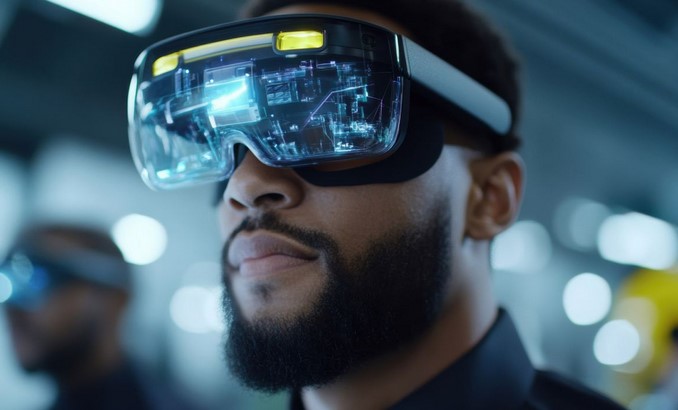
Fast forward to my recent consultancy with a medical device firm, where I donned a lightweight headset and found myself in that same surgical suite—digitally. I could drop a scalpel, miscalculate a dosage, or fumble a procedure, and the only consequence was a haptic vibration in my controller and a data point on a dashboard. This is the magic of VR job training, and after a decade in HealthTech, I can tell you: the “Flight Simulator” era of employment has finally arrived for everyone.


Why Muscle Memory Beats Manuals: The Science of Immersion

Traditional training is like trying to learn how to ride a bicycle by reading a 50-page PDF. You might memorize the parts of the bike, but the moment you sit on the seat, gravity takes over and you fall. VR job training bypasses the “reading” brain and talks directly to your proprioception—your body’s innate sense of where it is in space.

When you engage in a Virtual Reality simulation, your brain experiences “Presence.” This isn’t just a buzzword; it’s a neurological state where the subconscious mind treats the digital environment as reality.

  • Retention Rates: Research shows that VR learners are up to 4 times faster to train than in the classroom.

  • Confidence Levels: Learners are 275% more confident to act on what they learned after VR training.

  • Safety: You can simulate a chemical spill or a massive power failure without actually putting a single hair at risk.


The Tech Under the Hood: More Than Just “Gaming”

To the uninitiated, vr job training looks like playing a video game. But under the hood, we are dealing with a sophisticated “Tech Stack” designed for precision.

Haptic Feedback: The Sense of Touch

In my early days of testing VR for industrial maintenance, the controllers just clicked. Today, we use sophisticated haptic actuators that provide varying levels of resistance. If you are tightening a virtual bolt, the controller gets harder to squeeze as the bolt reaches its torque limit. This tactile data is crucial for developing “feel.”

Six Degrees of Freedom (6DoF)

Unlike mobile VR of the past, modern professional headsets use 6DoF. This means the system tracks your movement in every direction: up/down, left/right, forward/backward, and all rotations. This allows a trainee to physically crouch to inspect a leaking pipe or reach up to flip a high-voltage switch, creating a 1:1 physical match between the real and virtual worlds.


Industries Leading the Virtual Charge

While I live and breathe HealthTech, vr job training has permeated almost every sector that requires “Hands-On” precision.

1. Healthcare and Emergency Response

Surgeons now practice rare procedures on 3D models derived from actual patient CT scans. In my experience, the most moving application is for First Responders. We can simulate a crowded, chaotic subway accident—complete with smoke and noise—to teach “triage” under pressure. You simply cannot replicate that stress level with a plastic mannequin in a quiet classroom.

2. Manufacturing and Logistics

Companies like Walmart and DHL use VR to train floor staff on “Black Friday” rushes or hazardous material handling. By the time a worker steps onto the actual warehouse floor, they have already “lived” through the busiest days of the year virtually.

3. Hazardous Energy and Construction

Imagine training a technician to repair a wind turbine 300 feet in the air while a storm is rolling in. With VR, we can simulate the wind, the height, and the swaying of the tower. This desensitizes the worker to the height, allowing them to focus entirely on the technical repair.


The “ROI” of Virtual Reality: It’s Cheaper Than You Think

I often hear CEOs complain that “headsets are expensive.” I tell them to look at the Opportunity Cost.

  • Zero Downtime: Usually, training a pilot requires taking a multi-million dollar jet out of service. VR keeps the jet in the air and the trainee in the lounge.

  • Reduced Travel: Instead of flying 50 engineers to a central hub in Singapore, you ship 50 headsets (or have them use their own) and conduct the training in a shared virtual space.

  • The “Undo” Button: In real life, if a trainee breaks a $10,000 piece of diagnostic equipment, the budget takes a hit. In VR, “Reset” costs $0.


Pro Tips: Getting the Most Out of VR Training

Having implemented these systems for over a decade, I’ve seen where they succeed and where they fail miserably. Here is my “Expert Advice” for those looking to jump in:

Tips Pro: The 20-Minute Rule

VR “sickness” is real, especially for beginners. Never schedule a training session longer than 20 minutes for a first-timer. The brain needs time to calibrate. Frequency beats Duration. Three 20-minute sessions are infinitely more effective than one hour-long slog.

Hidden Warning: The “Hardware Trap”

Don’t over-invest in the most expensive headsets if your training is mostly “soft skills” (like HR de-escalation). High-end PC-VR is for surgical or mechanical precision. For communication training, standalone headsets like the Quest or Vive Focus are more than sufficient and much easier to manage.


Overcoming the “Gimmick” Perception

The biggest hurdle isn’t the technology; it’s the mindset. Some old-school managers still see VR as a “toy.” However, the data is becoming undeniable. When you look at the LSI Keywords of modern HR—Spatial Learning, Cognitive Load Management, and Biometric Feedback—it becomes clear that VR is the ultimate data collection tool.

We can now track where a trainee was looking during an accident. Did they miss the warning light because they were distracted? Did their heart rate spike (via integrated sensors)? This level of Biometric Insight allows us to tailor training to the individual’s psychological needs, something a textbook can never do.


Conclusion: Step Into Your New Office

VR job training is the bridge between theory and mastery. It provides a “Safe Space” to fail, which is ironically the fastest way to learn how to succeed. As we move further into 2026, the question isn’t whether you will use VR for training, but rather: how much further ahead will your competitors be if they start today and you don’t?

The barriers are down, the headsets are light, and the “Undo” button is waiting.

Are you ready to strap in? Have you ever tried a VR simulation that felt “too real,” or are you still skeptical about trading your physical tools for digital ones? Let’s talk about it in the comments—I’d love to hear your “first-time headset” stories!


Interested in the future of WorkTech? Subscribe for weekly deep-dives into the tools reshaping our professional lives.

AI Based Climate Modeling: Predicting the Future of Earth

Source:https://www.b360nepal.com

Imagine standing on a coastline in 2040. Is the water at your ankles, or is the street you’re standing on now a permanent part of the seabed? For decades, this wasn’t just a hypothetical question; it was a mathematical nightmare. Traditional climate models were so computationally “heavy” that running a single simulation for a specific city could take weeks of supercomputer time, often delivering results that were already outdated by the time the ink dried.

As someone who has spent over a decade at the intersection of technology and data systems, I’ve seen the “black box” of environmental forecasting evolve from clunky spreadsheets to the fluid, terrifyingly accurate world of AI based climate modeling. We are no longer just guessing which way the wind blows; we are teaching machines to understand the very breath of our planet.


The Crisis of Traditional Modeling: Why We Needed a Brain Upgrade

Before we dive into the “how,” let’s talk about the “why.” Classic climate models, known as General Circulation Models (GCMs), rely on solving complex physical equations for every square kilometer of the Earth.

I remember visiting a data center in 2016 where the heat generated by the servers simulating a simple storm surge was enough to warm the entire building. The problem? Resolution. Traditional models treat the Earth like a pixelated video game from the 1990s. If a cloud formation or a small forest fire is smaller than the “pixel” (grid cell), the model simply misses it.

This is where AI changes the game. Instead of calculating every single physical interaction from scratch, AI based climate modeling uses “emulators.” It’s the difference between calculating the trajectory of every single drop of water in a waterfall (Traditional) versus recognizing the pattern of how a waterfall behaves based on a thousand previous observations (AI).


How AI Based Climate Modeling Actually “Thinks”

To understand this, let’s use an analogy. Imagine you are trying to predict the outcome of a massive, 8-billion-person game of “The Sims.”

  • Traditional Models try to program the exact personality, hunger level, and mood of every single Sim. It crashes the computer.

  • AI Models look at 50 years of footage of people playing the game. It learns that “When the fridge is empty, the Sims get angry.” It predicts the outcome by recognizing patterns, not just crunching raw physics.

Machine Learning and Neural Networks

At the heart of these systems are Neural Networks. These are digital architectures inspired by the human brain. We feed them “Reanalysis Data”—decades of satellite imagery, ocean temperature readings, and atmospheric pressure logs. The AI learns the hidden correlations that humans might miss, such as how a heatwave in the Sahara might influence a hurricane in the Caribbean three weeks later.

Downscaling: Bringing the Global to the Local

One of the most exciting breakthroughs I’ve witnessed is Statistical Downscaling. AI can take a “blurry” global climate forecast and sharpen it to a specific neighborhood. This is crucial for HealthTech and urban planning. If we know exactly which hospital zone will hit 45°C, we can deploy cooling resources before the first heatstroke patient even arrives.


The Tech Stack: From Supercomputers to Transformers

The industry has shifted toward specific architectures that handle “spatio-temporal” data (data that changes over both space and time).

  1. Convolutional Neural Networks (CNNs): Excellent for analyzing satellite imagery and identifying patterns like melting ice caps or retreating shorelines.

  2. Graph Neural Networks (GNNs): These are used to model the Earth as a web of interconnected nodes (cities, oceans, forests), capturing how a change in one area ripples through the rest.

  3. Foundation Models: Similar to how GPT-4 is a foundation for text, we are seeing the rise of Climate Foundation Models—massive AI systems trained on all available planetary data that can be “fine-tuned” for specific tasks like predicting flash floods.


Real-World Impact: More Than Just Moving Graphs

In my professional journey, I’ve seen AI based climate modeling move from academic papers into the hands of decision-makers. It’s transforming industries in ways you might not expect:

  • Agriculture & Food Security: AI can predict “micro-climates,” telling a farmer in Indonesia exactly when to plant rice to avoid a localized drought that a global model would have missed.

  • Insurance & Risk Management: Companies are using AI to rewrite the “risk maps” of the world. This is a double-edged sword—it helps build more resilient cities, but it also makes it harder to insure homes in high-risk zones.

  • Renewable Energy Optimization: AI models predict cloud cover and wind speeds with minute-by-minute accuracy, allowing power grids to switch between solar, wind, and hydro power without a flicker of interruption.


Pro Tips: Navigating the AI Climate Era

If you are a student, a tech enthusiast, or a business leader looking to get into this niche, keep these “insider” tips in mind:

Pro Tip: Watch the “Data Gap”

AI is only as good as the sensors providing the data. We have great data for the US and Europe, but “data deserts” in parts of Africa and Southeast Asia lead to biased models. Always check the source density of a climate model before betting your business on it.

The Hidden Warning: Energy Paradox

Training a massive AI model consumes a significant amount of electricity. When looking at “Green AI” solutions, always ask about the Carbon Footprint of the Training Process. Is the model saving more carbon than it cost to create?


Challenges: Can We Trust the Machine?

Despite the brilliance of AI based climate modeling, we face a major hurdle: Interpretability. In the tech world, we call this the “Black Box” problem. An AI might predict a massive flood, but it can’t always explain why it thinks that will happen in the language of physics. For a government official to evacuate a city, they need more than just “the machine said so.”

This is leading to a new field called Physics-Informed Neural Networks (PINNs). We are essentially giving the AI a “physics textbook” to ensure its predictions don’t violate the laws of thermodynamics. It’s a hybrid approach: the speed of AI combined with the discipline of science.


Conclusion: The Final Forecast

We are at a crossroads. The Earth is changing faster than our old tools could track. AI based climate modeling isn’t just a “cool tech upgrade”; it is our planetary nervous system. It gives us the one thing we’ve never had before: Time. Time to adapt, time to reinforce our infrastructure, and time to mitigate the worst effects of a warming world.

The future is no longer a blur; it’s a high-definition map, and for the first time, we have the tools to read it.

What do you think? Should we let AI dictate our environmental policies, or should it remain strictly a “suggestion” tool for human scientists? Let’s discuss in the comments below—your perspective helps shape the dialogue on our digital and physical future!

Don’t forget to subscribe to our newsletter for more deep dives into the Tech that’s saving the world.

AI Text to Image Tools Transforming Creative Industries

Source:https://media.licdn.com

I remember sitting in a design sprint five years ago, watching a talented concept artist spend three days sketching variations of a “biotech-integrated hospital wing.” We burned through half the budget just on the ideation phase. Today, I can sit with that same client, type a few descriptive sentences into a prompt box, and generate ten high-fidelity architectural concepts before our coffee gets cold.

As someone who has spent a decade at the intersection of healthcare and technology, I’ve seen many “disruptions,” but AI text to image tools feel different. We aren’t just witnessing a new tool; we are witnessing the democratization of the “mind’s eye.” Whether you are a digital marketer, a healthcare educator, or a hobbyist, the barrier between thought and visual representation has effectively collapsed.


The Alchemy of Pixels: How AI Text to Image Tools Actually Work

To understand why this is a quantum leap, we need to move past the idea that the AI is simply “searching the internet” for images to stitch together. That’s a common misconception. Instead, think of these tools as a master chef who has tasted every dish on Earth. When you ask for a “futuristic MRI machine in a minimalist forest setting,” the AI doesn’t find a photo of an MRI and a photo of a forest. It understands the essence of “futuristic,” the geometry of an MRI, and the lighting of a forest. It then paints those pixels from scratch based on mathematical patterns it learned during training.

This process is largely driven by Diffusion Models. Imagine a clear photograph that is slowly covered in digital “static” (noise) until it’s unrecognizable. The AI is trained to do the reverse: it starts with a canvas of pure static and slowly removes the noise to reveal the image it believes you’re asking for.


Breaking Down the Big Players: Midjourney, DALL-E, and Stable Diffusion

If you’re just starting, the landscape of AI text to image tools can feel like a crowded marketplace. In my professional workflow, I categorize them by their “personality” and utility:

1. Midjourney: The Artistic Visionary

Midjourney is currently the gold standard for aesthetics. It lives inside Discord, which can be clunky for beginners, but the output is unparalleled. It has a specific “dreamy” or “cinematic” quality that makes even a simple prompt look like a National Geographic cover.

2. DALL-E 3 (OpenAI): The Literal Interpreter

DALL-E 3 is the most user-friendly. Because it’s integrated with ChatGPT, you don’t need to learn “prompt engineering” (the art of talking to AI). You can speak to it in plain English. If you say, “Put a stethoscope on a robot’s neck,” it knows exactly what you mean without needing technical modifiers.

3. Stable Diffusion: The Architect’s Toolkit

This is the “open-source” option. It’s for those who want total control. You can run it on your own computer, train it on your own face, or use it to precisely edit specific parts of an image. In the HealthTech space, we often prefer this for data privacy reasons.


Beyond Art: Real-World Applications in Creative Industries

We often talk about AI in the context of “making pretty pictures,” but the industrial impact is much deeper. In my experience, three sectors are feeling the shift most acutely:

High-Speed Prototyping in Healthcare

In medical device design, we use AI text to image tools to visualize ergonomic concepts. Instead of building physical mockups, we generate 50 variations of a wearable glucose monitor to see how different textures and colors might look on various skin tones. This saves months of development time.

Revolutionizing Digital Marketing

Marketing used to be limited by stock photo libraries. If you needed a photo of “a diverse group of seniors using a VR headset for physical therapy,” and it didn’t exist on Getty Images, you had to hire a production crew. Now, you can generate that specific niche imagery in seconds, ensuring your brand stays visually unique and inclusive.

Architecture and Interior Design

Architects are using “image-to-image” features to turn crude napkins sketches into photorealistic renders. By feeding an AI a floor plan and a text prompt like “Scandinavian industrial with natural lighting,” the AI provides a lightning-fast mood board that clients can react to immediately.


The Ethics and “The Uncanny Valley”

We cannot talk about this tech without addressing the elephant in the room: Copyright and Job Displacement. I’ve seen firsthand the anxiety these tools cause among illustrators. It’s a valid concern. These models were trained on billions of images, often without the explicit consent of the original artists. We are currently in a “Wild West” era of legislation where the courts are still catching up to the code.

Furthermore, there is the Uncanny Valley—that eerie feeling when an image looks almost human but is slightly “off.” (Pro tip: always check the hands. AI still struggles to count five fingers correctly!).


Pro Tips: How to Get the Best Results

Having spent thousands of hours prompting, here is my “secret sauce” for moving from amateur to pro:

  • The “Lighting” Cheat Code: Never just describe the object. Describe the light. Adding terms like “Volumetric lighting,” “Golden hour,” or “Cinematic rim lighting” will instantly elevate your output from a flat drawing to a professional-grade visual.

  • Avoid “Prompt Bloat”: Beginners often write 500-word paragraphs. AI gets confused by too many instructions. Focus on the Subject + Action + Setting + Style. * Use Negative Prompts: In tools like Stable Diffusion, tell the AI what you don’t want. Adding “–no blur, distorted, extra limbs” is often more effective than telling it what you do want.

Hidden Warning: Avoid using AI-generated images for medical diagrams that require 100% anatomical accuracy. While AI is great at “vibes,” it can hallucinate the number of valves in a heart or the placement of nerves. Always have a human expert verify technical visuals.


The Future: From Static Images to Living Worlds

Where do we go from here? The next 18 months will see the blurring of lines between text-to-image and text-to-video. We are already seeing “consistent characters,” where the AI can generate the same person in 100 different poses and settings—a holy grail for comic book creators and filmmakers.

We aren’t losing creativity; we are changing its definition. The “creator” of the future won’t be the person who can draw the straightest line, but the person who can curate the best ideas.

Conclusion: Are You Ready to Prompt?

AI text to image tools are no longer a futuristic gimmick; they are a fundamental shift in how we communicate ideas. They empower the non-artist to create and the artist to scale. However, the tool is only as good as the person wielding it.

The question isn’t whether AI will replace designers—it’s whether designers who use AI will replace those who don’t.

What’s your take? Are you excited to use these tools for your next project, or do you have concerns about the “soul” of AI art? Drop your thoughts in the comments below, and let’s start a conversation!