I once stood in a high-stakes surgical suite where a trainee’s hand trembled while holding a delicate instrument. The tension in the room was suffocating. In that moment, the cost of a mistake wasn’t just a budget overrun; it was a human life. For years, the mantra in high-risk industries was “see one, do one, teach one,” but that “doing” phase has always been fraught with anxiety and astronomical insurance premiums.
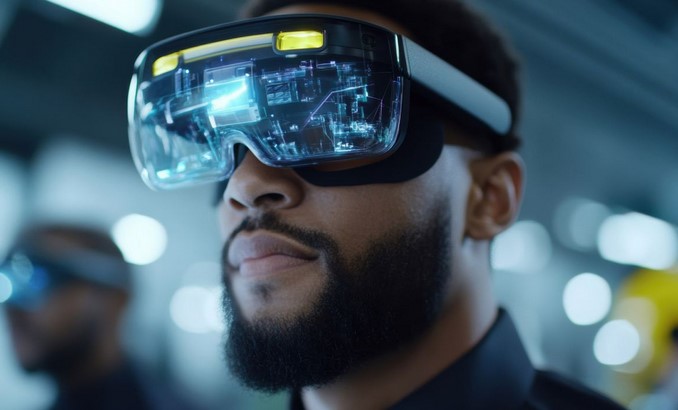
Fast forward to my recent consultancy with a medical device firm, where I donned a lightweight headset and found myself in that same surgical suite—digitally. I could drop a scalpel, miscalculate a dosage, or fumble a procedure, and the only consequence was a haptic vibration in my controller and a data point on a dashboard. This is the magic of VR job training, and after a decade in HealthTech, I can tell you: the “Flight Simulator” era of employment has finally arrived for everyone.
Why Muscle Memory Beats Manuals: The Science of Immersion
Traditional training is like trying to learn how to ride a bicycle by reading a 50-page PDF. You might memorize the parts of the bike, but the moment you sit on the seat, gravity takes over and you fall. VR job training bypasses the “reading” brain and talks directly to your proprioception—your body’s innate sense of where it is in space.
When you engage in a Virtual Reality simulation, your brain experiences “Presence.” This isn’t just a buzzword; it’s a neurological state where the subconscious mind treats the digital environment as reality.
-
Retention Rates: Research shows that VR learners are up to 4 times faster to train than in the classroom.
-
Confidence Levels: Learners are 275% more confident to act on what they learned after VR training.
-
Safety: You can simulate a chemical spill or a massive power failure without actually putting a single hair at risk.
The Tech Under the Hood: More Than Just “Gaming”
To the uninitiated, vr job training looks like playing a video game. But under the hood, we are dealing with a sophisticated “Tech Stack” designed for precision.
Haptic Feedback: The Sense of Touch
In my early days of testing VR for industrial maintenance, the controllers just clicked. Today, we use sophisticated haptic actuators that provide varying levels of resistance. If you are tightening a virtual bolt, the controller gets harder to squeeze as the bolt reaches its torque limit. This tactile data is crucial for developing “feel.”
Six Degrees of Freedom (6DoF)
Unlike mobile VR of the past, modern professional headsets use 6DoF. This means the system tracks your movement in every direction: up/down, left/right, forward/backward, and all rotations. This allows a trainee to physically crouch to inspect a leaking pipe or reach up to flip a high-voltage switch, creating a 1:1 physical match between the real and virtual worlds.
Industries Leading the Virtual Charge
While I live and breathe HealthTech, vr job training has permeated almost every sector that requires “Hands-On” precision.
1. Healthcare and Emergency Response
Surgeons now practice rare procedures on 3D models derived from actual patient CT scans. In my experience, the most moving application is for First Responders. We can simulate a crowded, chaotic subway accident—complete with smoke and noise—to teach “triage” under pressure. You simply cannot replicate that stress level with a plastic mannequin in a quiet classroom.
2. Manufacturing and Logistics
Companies like Walmart and DHL use VR to train floor staff on “Black Friday” rushes or hazardous material handling. By the time a worker steps onto the actual warehouse floor, they have already “lived” through the busiest days of the year virtually.
3. Hazardous Energy and Construction
Imagine training a technician to repair a wind turbine 300 feet in the air while a storm is rolling in. With VR, we can simulate the wind, the height, and the swaying of the tower. This desensitizes the worker to the height, allowing them to focus entirely on the technical repair.
The “ROI” of Virtual Reality: It’s Cheaper Than You Think
I often hear CEOs complain that “headsets are expensive.” I tell them to look at the Opportunity Cost.
-
Zero Downtime: Usually, training a pilot requires taking a multi-million dollar jet out of service. VR keeps the jet in the air and the trainee in the lounge.
-
Reduced Travel: Instead of flying 50 engineers to a central hub in Singapore, you ship 50 headsets (or have them use their own) and conduct the training in a shared virtual space.
-
The “Undo” Button: In real life, if a trainee breaks a $10,000 piece of diagnostic equipment, the budget takes a hit. In VR, “Reset” costs $0.
Pro Tips: Getting the Most Out of VR Training
Having implemented these systems for over a decade, I’ve seen where they succeed and where they fail miserably. Here is my “Expert Advice” for those looking to jump in:
Tips Pro: The 20-Minute Rule
VR “sickness” is real, especially for beginners. Never schedule a training session longer than 20 minutes for a first-timer. The brain needs time to calibrate. Frequency beats Duration. Three 20-minute sessions are infinitely more effective than one hour-long slog.
Hidden Warning: The “Hardware Trap”
Don’t over-invest in the most expensive headsets if your training is mostly “soft skills” (like HR de-escalation). High-end PC-VR is for surgical or mechanical precision. For communication training, standalone headsets like the Quest or Vive Focus are more than sufficient and much easier to manage.
Overcoming the “Gimmick” Perception
The biggest hurdle isn’t the technology; it’s the mindset. Some old-school managers still see VR as a “toy.” However, the data is becoming undeniable. When you look at the LSI Keywords of modern HR—Spatial Learning, Cognitive Load Management, and Biometric Feedback—it becomes clear that VR is the ultimate data collection tool.
We can now track where a trainee was looking during an accident. Did they miss the warning light because they were distracted? Did their heart rate spike (via integrated sensors)? This level of Biometric Insight allows us to tailor training to the individual’s psychological needs, something a textbook can never do.
Conclusion: Step Into Your New Office
VR job training is the bridge between theory and mastery. It provides a “Safe Space” to fail, which is ironically the fastest way to learn how to succeed. As we move further into 2026, the question isn’t whether you will use VR for training, but rather: how much further ahead will your competitors be if they start today and you don’t?
The barriers are down, the headsets are light, and the “Undo” button is waiting.
Are you ready to strap in? Have you ever tried a VR simulation that felt “too real,” or are you still skeptical about trading your physical tools for digital ones? Let’s talk about it in the comments—I’d love to hear your “first-time headset” stories!
Interested in the future of WorkTech? Subscribe for weekly deep-dives into the tools reshaping our professional lives.