
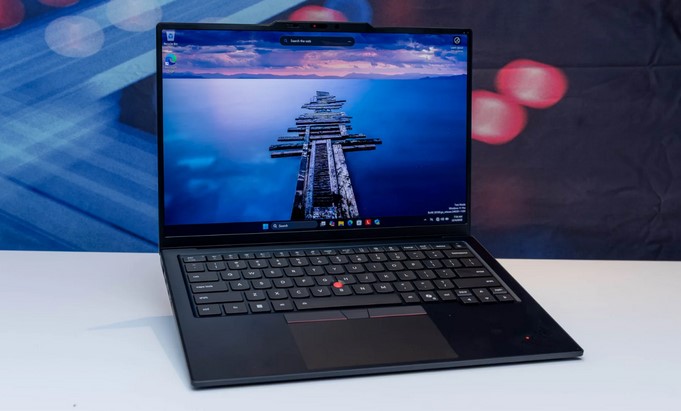
Best Laptops for Machine Learning in 2026

Source:https://helios-i.mashable.com

Last week, a junior data scientist pinged me on Slack, desperate. He had tried to fine-tune a modest 7-billion parameter local Large Language Model (LLM) on his sleek, ultra-thin ultrabook. Midway through the second epoch, his laptop didn’t just freeze—it thermal-throttled so aggressively that the chassis was physically hot enough to fry an egg, and the process crashed with the dreaded Out of Memory (OOM) error.

In my ten years of working at the intersection of healthtech and high-performance computing, I’ve seen this exact story play out a hundred times. People buy a laptop based on flashy design or pure CPU speed, completely ignoring how machine learning actually punishes hardware.

Selecting the best laptops for machine learning isn’t about buying the most expensive machine on the shelf. It’s about matching your hardware configuration to your specific data pipeline. Let’s break down what actually moves the needle in 2026 and look at the absolute best rigs available for beginners and intermediate practitioners.

The Core Spec Hierarchy: What Actually Matters?

When you are buying a machine for AI development, the marketing stickers on the box will try to sell you on screen resolution or NPU (Neural Processing Unit) “TOPS” numbers. Don’t fall for it.

To understand what you need, think of training a neural network like cooking a massive banquet dinner:

The Kitchen Analogy: The CPU is your chef—it coordinates everything. The SSD storage is your pantry—it holds all your raw ingredients (datasets). The RAM is your kitchen counter space—if it’s too small, you can’t chop veggies and roll dough at the same time. Finally, the GPU VRAM is a specialized high-speed blender; without it, certain complex sauces take hours to blend by hand.

The Best Laptops for Machine Learning in 2026

The hardware landscape has shifted dramatically. NVIDIA’s next-gen Blackwell RTX 50-series GPUs have hit the mobile market, and Apple’s M4 and M5 unified memory architectures have redefined how we handle large models locally. Here are the top contenders that I have vetted for real-world ML workloads.

Laptop Best For Key Specs Price Range
ASUS ROG Strix G16 Overall Best Value Intel Core i7, 16GB-32GB RAM, RTX 5060 (GDDR7) Budget to Mid
MacBook Pro 16″ (M4/M5 Max) Unified Memory Powerhouse Up to 16-Core CPU, Up to 128GB Unified RAM Premium
Lenovo ThinkPad P16 Gen 3 Desktop-Class Workstation Intel Ultra 9, 64GB RAM, NVIDIA RTX PRO 5000 Enterprise
ASUS ROG Zephyrus G16 Deep Learning Portable AMD Ryzen AI 9, 32GB RAM, RTX 5070 Ti Mid-High

1. ASUS ROG Strix G16 — The Unbeatable Budget Entry

If you are a student or a beginner jumping into TensorFlow and PyTorch, this machine is the absolute sweet spot.

  • The Big Win: It packs NVIDIA’s latest RTX 5060 GPU utilizing ultra-fast GDDR7 memory. Because deep learning libraries rely heavily on NVIDIA’s CUDA architecture, having a dedicated green-team card is non-negotiable if you want to train neural networks locally.

  • The Catch: It looks like a gaming laptop, complete with RGB lighting, and the battery life maxes out at around 4 hours under development workloads.

2. Apple MacBook Pro 16″ (M4/M5 Series) — The Local LLM King

Apple Silicon handles machine learning differently, and it has completely stolen the hearts of intermediate developers who work with large models.

  • The Big Win: Unified Memory Architecture. In a typical Windows laptop, your GPU VRAM is capped (usually 8GB to 16GB). If a model is 20GB, it won’t fit. Apple’s unified memory allows the GPU to utilize up to 128GB of RAM as VRAM. If you want to run or prototype local LLMs or Stable Diffusion pipelines without quantization compromises, this is the gold standard.

  • The Catch: No native CUDA support. You’ll be relying on Apple’s MLX framework or Metal Performance Shaders (MPS). It is also heavily expensive.

3. Lenovo ThinkPad P16 Gen 3 — The Heavyweight Enterprise Choice

For intermediate practitioners handling massive local data preprocessing, tabular data engineering, and heavy Apache Spark pipelines.

  • The Big Win: Utter reliability and unparalleled expandability. It features the NVIDIA RTX PRO 5000 workstation card and can be expanded up to an insane 192GB of DDR5 RAM. Its cooling solution is built like a tank, ensuring no thermal throttling during an all-night local training run.

  • The Catch: It weighs over 2.5 kg. This is a “portable desktop,” not something you comfortably work with on an airplane tray table.

Technical Breakdown: GPU VRAM vs. Unified Memory

If you are confused between choosing a Windows RTX machine or an Apple Silicon Mac, look closely at your primary day-to-day work:

                  YOUR MACHINE LEARNING WORKFLOW
                                |
        +-----------------------+-----------------------+
        |                                               |
  DEEP LEARNING / CUDA                              LOCAL LLMs / 
(PyTorch, TensorFlow, CNNs)                    LARGE DATASETS (Pandas)
        |                                               |
        v                                               v
NVIDIA RTX (e.g., RTX 5070)                      APPLE SILICON (M4/M5)
  Pros: Raw processing speed                      Pros: Massive memory pool
  Cons: VRAM bottleneck (8-12GB)                   Cons: Lacks CUDA ecosystem

Pro Insights for Tech Buyers

💡 Pro Tip: Prioritize VRAM and RAM Over CPU Cores

When budgeting, sacrifice the CPU upgrade to buy more memory. An extra 16GB of system RAM or moving from an 8GB GPU to a 12GB GPU will save you from thousands of crashed execution codes. Your data science libraries can be offloaded to the cloud; your local code writing environment cannot.

⚠️ Watch the TGP (Total Graphics Power)

Not all identical GPUs are equal! A thin-and-light laptop with an RTX 5070 restricted to 65W of power will perform significantly worse than a thicker gaming laptop running the exact same RTX 5070 pushed to 140W TGP. Always check the power wattage in the deep technical specs before purchasing.

Final Verdict: Which One Fits Your Desk?

If you are just starting out and need CUDA capability on a budget, buy an ASUS ROG Strix or TUF variant with an RTX 50-series card. If your work revolves around data analytics, text processing, and local LLM deployment—and you have the budget—the MacBook Pro with an M4/M5 Pro or Max chip offers an unmatched portable environment.

Remember: Your laptop is a tool to prototype, clean data, and write code. For massive datasets, you will eventually offload the heavy lifting to cloud instances like AWS, Google Cloud, or Vast.ai anyway. Buy a machine that makes the local development process seamless.

What’s Your ML Workflow Look Like?

Are you planning to focus primarily on deep learning computer vision, or are you looking to dive straight into engineering large language models? Leave a comment below detailing your budget and career goals, and I’ll help you pick the exact spec layout you need!

For a deeper visual dive into real-world performance benchmarks, hardware comparisons, and avoiding common purchasing mistakes, check out this comprehensive Laptop Ranking Guide for AI and Machine Learning Engineers. This video breaks down why traditional tech reviews often recommend the wrong specifications for actual code training.
Quantum Computing Careers: Skills and Opportunities Ahead

Source:https://pexelle.com

A few months ago, I was sitting in a tech conference lounge, listening to a software engineer with a decade of experience express a very real, very modern anxiety. “I feel like I finally mastered full-stack development, just in time for the entire paradigm to shift,” he told me. He wasn’t talking about AI. He was looking further down the road, toward the impending commercialization of quantum tech.

Over my 10+ years embedded in the tech ecosystem, I’ve watched waves of innovation disrupt job markets—mobile apps, cloud migration, machine learning. But quantum is different. It isn’t just an upgrade to our current systems; it’s an entirely new way of thinking about computation. If you’ve been wondering whether quantum computing careers are a distant sci-fi dream or a tangible path for you today, let me share a view from the trenches: the shift is happening right now, and the talent gap is massive.

Moving Beyond the Hype: What is Quantum Computing, Really?

Before we look at the job boards, let’s demystify the tech. Whenever I mentor developers looking to transition, they usually look terrified of the underlying physics.

To put it simply, think of a traditional computer as a light switch. It can either be off (0) or on (1). Every piece of software you use, from mobile games to complex enterprise databases, is just a massive collection of these switches turning on and off.

A quantum computer, however, uses a quantum bit—or qubit.

The Spinning Coin Analogy: Imagine a coin lying flat on a table. It can either show heads or tails. That is your classical bit. Now, imagine spinning that coin. While it is spinning, is it heads or tails? It’s a blur of both at the same time. This state is called superposition.

Because qubits can exist in multiple states simultaneously, and hook up with each other through a spooky phenomenon called entanglement, they can process complex calculations at speeds that would make today’s supercomputers look like abacuses. We aren’t just building faster computers; we are building entirely new engines for discovery.

The Exploding Landscape of Quantum Computing Careers

For years, quantum was confined to university labs and heavily funded government research facilities. Today, tech giants like IBM, Google, and Microsoft, alongside agile startups like Rigetti and IonQ, are racing to build stable, fault-tolerant quantum systems. This commercial push has ignited a sudden demand for a new kind of workforce.

The good news? You do not need a PhD in theoretical physics to build a successful career in this space anymore. As the industry matures, the job roles are diversifying rapidly.

1. Quantum Software Engineer

If you already know how to code, this is your most accessible bridge. These engineers write the software that runs on quantum hardware. Instead of traditional logic gates, they work with quantum circuits and frameworks like IBM’s Qiskit, Google’s Cirq, or Microsoft’s Q#. You’re essentially translating real-world problems into algorithms that a quantum computer can digest.

2. Quantum Algorithm Researcher

This role sits closer to mathematics and physics. Researchers focus on designing new algorithms that can leverage quantum mechanics to solve specific problems faster than classical methods. Think Shor’s algorithm for cryptography or Grover’s algorithm for database searches.

3. Quantum Hardware Engineer

For the builders and tinkerers, this is where the physical magic happens. These specialists design, build, and maintain the actual quantum processors. It involves working with extreme environments, such as superconducting qubits that require dilution refrigerators to stay colder than deep space, or trapped ion systems that use lasers to hold particles still.

4. Quantum Product Managers and Consultants

Tech companies desperately need translators. As enterprises look to adopt quantum solutions for logistics, finance, and pharmaceutical discovery, they need business-savvy professionals who understand the capabilities of the tech and can manage the development lifecycle without getting bogged down in the raw calculus.

The Essential Skill Stack: How to Prepare Today

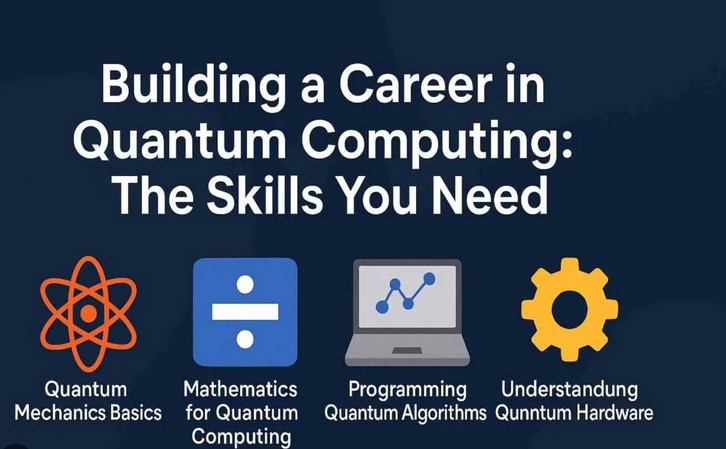
If you want to position yourself for the wave of quantum computing careers, you need a balanced blend of foundational theory and practical, hands-on programming. Here is the stack you should focus on developing.

+-------------------------------------------------------------+
|                      THE QUANTUM SKILL STACK                 |
+-------------------------------------------------------------+
|  Programming: Python, Qiskit, Cirq, Pennylane               |
+-------------------------------------------------------------+
|  Mathematics: Linear Algebra, Complex Numbers, Probability  |
+-------------------------------------------------------------+
|  Core Theory: Quantum Gates, Circuits, Superposition        |
+-------------------------------------------------------------+

Master the Prerequisites (No, You Don’t Need a PhD)

  • Linear Algebra: If you understand vectors, matrices, and matrix multiplication, you already speak the language of quantum states. This is far more critical than advanced calculus for software roles.

  • Python Proficiency: Python is the undisputed king of quantum software development. Almost every major quantum development kit (QDK) is Python-based or has a Python wrapper.

  • Quantum Mechanics Basics: You don’t need to derive equations from scratch, but you must intuitively understand concepts like bra-ket notation, unitary matrices, and quantum decoherence.

Get Hands-On with Quantum Frameworks

Don’t just read theory; write code. You can actually run programs on real quantum computers today via the cloud.

  • Qiskit: Developed by IBM, this is currently the most popular open-source SDK. The documentation is fantastic, and they offer free cloud access to their prototype systems.

  • PennyLane: Created by Xanadu, this library is exceptional if you are interested in quantum machine learning (QML) and differentiable quantum circuits.

Pro Tips for Navigating the Emerging Market

💡 Pro Tip: Focus on Hybrid Classical-Quantum Systems

Do not abandon your traditional software engineering skills. The future of enterprise tech isn’t 100% quantum; it is hybrid. The most valuable engineers over the next decade will be those who know how to orchestrate workflows where a classical computer handles 90% of the application, offloading only the most complex optimization math to a quantum co-processor.

⚠️ Beware of the “Quantum Winter” Hype

The industry goes through intense cycles of hype. We are currently navigating the NISQ era (Noisy Intermediate-Scale Quantum), where devices have limited qubits and high error rates. Do not expect to build production-ready applications next week. Companies hiring right now are investing in long-term R&D. Look for employers who have a realistic, multi-year roadmap rather than those chasing press release buzzwords.

Why the Opportunity is Ahead of Us

The implications of this technology are staggering. In finance, quantum algorithms will optimize massive global portfolios in seconds. In chemistry, simulating molecular structures at an atomic level will allow us to design life-saving drugs and highly efficient solar cells in days rather than decades.

We are currently standing at the exact same historical juncture as the computer pioneers of the late 1960s. The hardware is loud, expensive, and requires specialized environments, but the foundational architecture of the next fifty years of human progress is being written right now.

Building a career in this space requires patience, a willingness to embrace ambiguity, and a passion for continuous learning. But for those who take the leap, the rewards will be monumental. You aren’t just learning a new framework; you are future-proofing your career against the next century of tech evolution.

What’s Your Next Move?

The barrier to entry has never been lower, with free simulators and open-source tools available at your fingertips. Are you ready to start experimenting with quantum circuits, or does the math still feel a bit daunting? Drop a comment below with your background, and let’s discuss how you can map your current skills into the quantum era!