
You are rushing to type an urgent email on your smartphone while walking to a meeting. You want to type “I’ll be there in five minutes,” but your phone’s aggressive autocorrect steps in and changes it to “I’ll be dead in five minutes.” You hit send before noticing. Panic ensues.
We have all fallen victim to these frustrating, sometimes embarrassing, digital miscommunications. For years, typing on mobile devices felt like a constant battle against rigid, clumsy software that felt completely disconnected from how humans actually communicate.
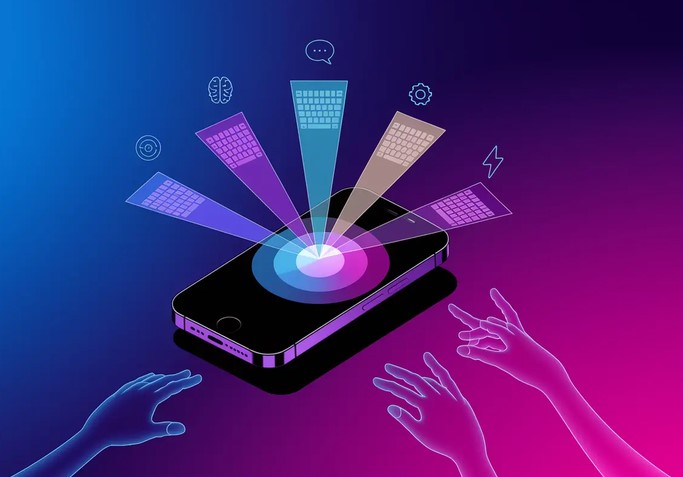
Having spent over a decade developing software interfaces and optimizing technical systems, I remember when text prediction was nothing more than a static, frustrating dictionary lookup. If you mistyped a single letter, the system failed. But behind the scenes, a massive shift has occurred. The implementation of modern ai for predictive text has silently transformed our keyboards from dumb input boards into deeply intuitive mind-readers that adapt to our unique digital voices.
The Cognitive Engine: How AI for Predictive Text Actually Thinks
To understand why modern text prediction feels so much smarter than it did a few years ago, we need to lift the hood. Traditional predictive text was built on basic statistical models called N-grams. If you typed “Happy,” the system simply looked at its database and calculated that “Birthday” was the most common next word in the English language. It didn’t care about your mood, your recipient, or the context of your conversation.
Modern ai for predictive text works entirely differently by utilizing advanced machine learning architectures. Think of it as a seasoned administrative assistant.
An old predictive keyboard was like a machine that only knew how to look up words in a dictionary. A modern AI keyboard, however, is like an assistant who has worked with you for years; they know your writing style, understand your inside jokes, recognize who you are speaking to, and can seamlessly finish your sentences before you even finish forming the thought.
[Old N-Gram System] ---> Looks only at the last word ---> High error rates
[Modern AI System]  ---> Analyzes the entire sentence ---> High contextual accuracy
This massive leap in capability relies on several sophisticated technical pillars:
-
Transformers and Neural Networks: These advanced AI models process words in relation to all the other words in a sentence, rather than treating them as isolated units.
-
Contextual Awareness: The algorithm analyzes whether you are typing a formal work email on Slack or a casual message to a friend on WhatsApp, shifting its vocabulary recommendations accordingly.
-
On-Device Machine Learning: Modern processors handle these complex calculations locally on your smartphone chip, ensuring your predictions appear instantaneously without lag.
From Convenience to Inclusivity: The Real-World Impact
When people talk about smart text prediction, they usually focus on speed. We love saving a few seconds while replying to text messages. But working closely with software optimization has shown me that the true value of this technology goes far deeper than mere convenience.
Empowering Neurodivergent Users
For individuals navigating dyslexia, dysgraphia, or motor control challenges, typing on a touchscreen can be an exhausting hurdle. Standard keyboards punish spelling mistakes with confusing errors. Advanced AI systems, however, excel at semantic interpretation. Even if a user jumbles the character order of a word, the AI looks at the surrounding context of the sentence to figure out the intended meaning and subtly corrects it without breaking the user’s workflow.
The Professional Efficiency Boost
In professional settings, the integration of smart text tools has dramatically reduced cognitive fatigue. When your email client or document processor accurately predicts corporate phrases, repetitive updates, or formal sign-offs, it frees up mental bandwidth. You are no longer wasting energy focusing on mechanics; instead, you can focus entirely on the core strategy of your message.
My Industry Insight: When we first started testing localized neural networks for mobile input typing, engineers worried that the background processing would completely drain smartphone battery life. Today, highly optimized micro-models run so efficiently on modern hardware that they consume less than 1% of your daily battery, balancing massive computational power with incredible efficiency.
The Dark Side of Smart Typing: Privacy and Bias Challenges
While the evolution of text prediction is incredibly exciting, we must maintain an analytical perspective. As these AI systems become more deeply integrated into our daily workflows, they introduce significant technical responsibilities and hidden risks.
The Feedback Loop of Human Bias
Because AI models learn from massive troyes of human text, they can inadvertently internalize our worst habits. If an algorithm is trained on biased data, it might repeatedly suggest gendered stereotypes, microaggressions, or exclusionary phrasing. Developers have to work tirelessly to build ethical guardrails that prevent these automated systems from perpetuating societal biases.
Data Privacy Concerns
For an AI to predict your text flawlessly, it needs to analyze what you write. This reality understandably raises massive red flags for data privacy.
-
Data Leakage Risks: Early versions of cloud-based prediction engines risked sending sensitive credentials or personal text back to corporate servers.
-
The Federated Learning Solution: To counter this, modern platforms use a security framework called Federated Learning. Your phone learns from your specific typing habits locally, and only sends generalized, encrypted mathematical updates back to the main model, keeping your private conversations completely secure.
Expert Advice: How to Train Your AI Keyboard Like a Pro
To get the absolute most out of your modern predictive text tools, you shouldn’t just leave them on their default factory settings. Here is how you can actively optimize the underlying technology to match your workflow.
-
Reset the Cache for a Clean Slate: If your keyboard has accidentally learned an embarrassing typo that it constantly suggests, go into your device settings (
Settings > System > Languages & Input) and clear your keyboard’s personalized dictionary data to start fresh. -
Leverage Multilingual Typing Toggle: If you frequently switch between languages (such as English and Indonesian), do not manually switch layouts. Enable native multilingual typing in your keyboard settings; modern AI can detect which language you are using mid-sentence and adjust its predictions automatically.
-
Peringatan Tersembunyi (The Smart Filter Danger): Be highly cautious when typing highly confidential or sensitive medical data on third-party keyboard apps. Always check the app permissions to ensure it does not require full cloud network access to function, which could compromise your sensitive information.
The Typing Landscape of Tomorrow
We are rapidly moving toward a world where the physical keyboard itself will feel like an absolute relic of the past. As ai for predictive text continues to mature alongside voice recognition and eye-tracking technology, the friction of moving a thought from your brain onto a digital screen will drop down to zero.
We are no longer just instructing computers exactly what to type letter by letter. Instead, we are collaborating with an intelligent digital assistant that shapes, refines, and accelerates our communication across the digital world.
What is Your Experience?
Have you noticed your smartphone keyboard getting significantly smarter over the past year, or does it still drive you crazy with bad autocorrect choices? Have you ever had an embarrassing predictive text mishap you’d be willing to share?
Let me know your thoughts in the comments below! If you found this technical deep-dive insightful, share it with your friends and colleagues to help them type smarter today.